Amazon Abandons Four Data Centers in Loudoun County, Ceding Ground to Local Opposition
The tech giant will convert the 122-acre site into residential and mixed-use spaces, marking a rare strategic pivot in the face of community resistance.
By Rahul Mehta ·
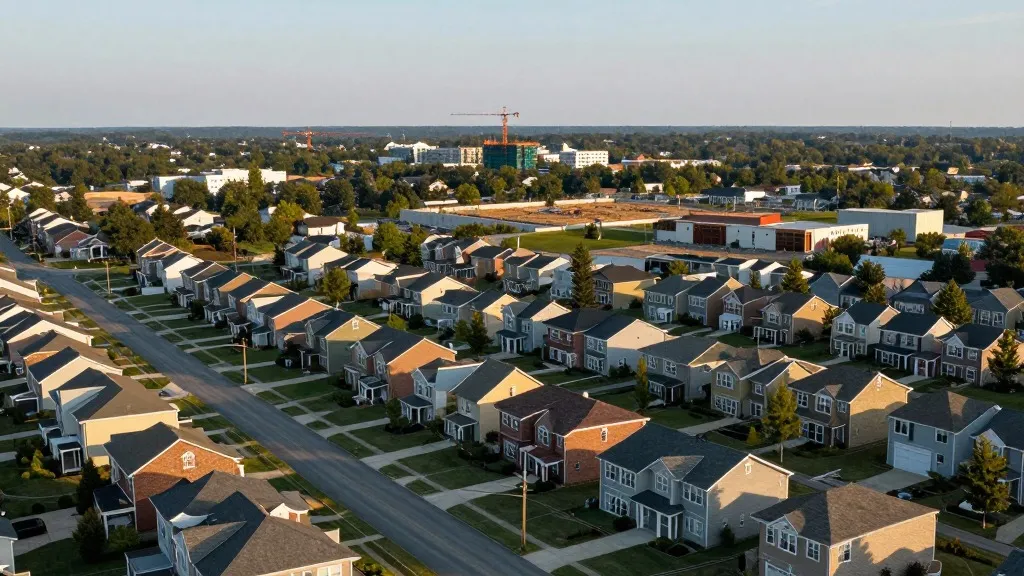
Amazon has officially withdrawn its plans to construct four new data centers on a 122-acre parcel of land in Loudoun County, Virginia. In a significant shift from its previous infrastructure strategy, the company will repurpose the majority of the former George Washington University campus site for mixed-use and residential development. This decision follows intense scrutiny and pushback from local residents who opposed the expansion in a region already saturated with digital infrastructure.
The scale of the repurposing is substantial. Amazon will donate 25 acres of the property to Loudoun County, where it is designated for the construction of a community arts center and new recreational facilities. Additionally, the company has committed to contributing $5 million to the county’s housing fund. These financial and land commitments represent a tangible concession to the local community, aiming to address specific grievances regarding noise pollution and the immense power demands of data center operations.
The proposal for the four facilities was first submitted in July 2026. By September, the momentum had shifted, prompting a meeting between Phyllis J. Randall, the Chair of the Loudoun County Board of Supervisors, and Amazon representatives. During these discussions, county officials suggested that an alternative use for the land might be more beneficial for the region. This dialogue led to the current agreement, which prioritizes residential and community needs over pure data storage capacity.
Josh Weissman, Amazon’s vice president in charge of data center development, explained the company's reasoning for the pivot. He noted that while the firm had initially viewed the property as an ideal location for new facilities, it ultimately respected the county’s “pointed concerns about data center development at this particular site.” Weissman acknowledged that the company and the county viewed the legal development potential of the land differently but concluded that “the best outcome for all is to come together on a shared vision for this campus rather than engage in costly litigation.”
This retreat occurs against the backdrop of a global surge in artificial intelligence, which has dramatically increased the demand for large-scale computing facilities. While cloud services and storage systems have always driven data center construction, the recent AI boom has ratcheted up the need for larger and more powerful sites. However, local communities are increasingly wary of the environmental and economic impacts, including spikes in electricity prices, water shortages, and deforestation associated with these mammoth facilities.
The national conversation around data centers has also intensified. Just days before Amazon announced its change of plans, President Donald Trump called on data center builders and AI hyperscalers to pay local communities a dividend in response to energy-related price increases. In a social media post, the President suggested that data centers should be required to generate their own electricity and sell excess energy back to the local community, further highlighting the tension between tech expansion and local resource management.
County officials have framed the outcome as a success of negotiation over conflict. Chair Randall stated that by choosing “dialogue over reflexive disagreement,” the county and Amazon created a valuable opportunity. She emphasized that the agreement provides new spaces for residents to gather and play, while most importantly, it facilitates the provision of more attainable homes for working families in the area.
The stakes of this decision extend beyond a single site in Northern Virginia. It signals a potential shift in how major tech companies approach real estate in high-demand areas. By swapping a high-profile data center project for residential and community infrastructure, Amazon may be setting a precedent for balancing technological growth with local livability. This move underscores the growing power of local stakeholders to influence the physical footprint of the AI revolution, forcing giants to reconsider where and how they build.
Source: Tom's Hardware