Tesla Delays Humanoid Robot Launch to 2027 Amid Persistent Hardware Challenges
The company has pushed external Optimus deliveries back two years, citing unresolved issues with dexterity and durability that competitors are also grappling with.
By Jennifer Paige ·
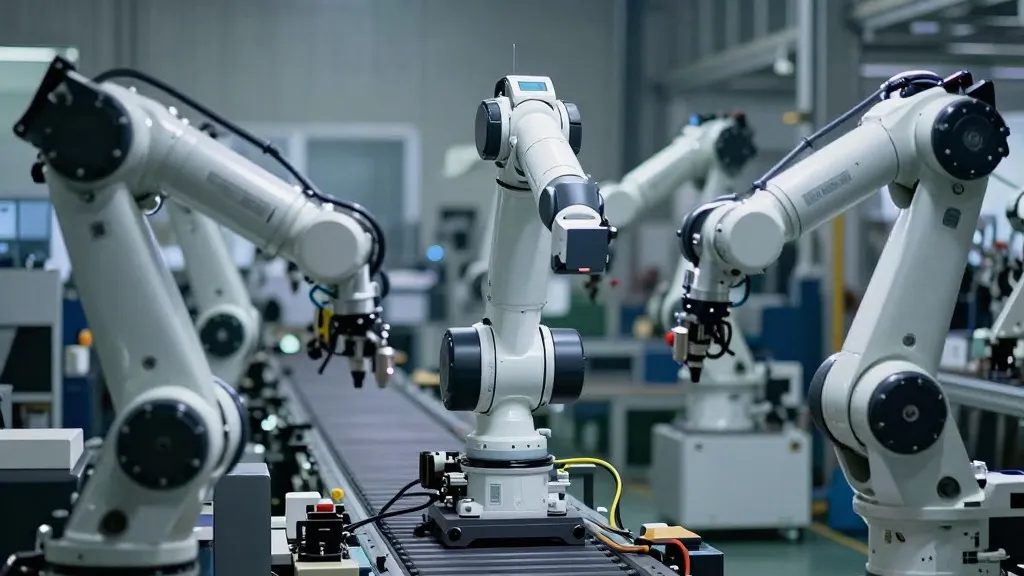
Tesla has officially postponed the start of external deliveries for its Optimus humanoid robots to the end of 2027, a timeline that reflects the ongoing technical hurdles facing the industry. During the Q3 2026 earnings call, CEO Elon Musk identified the robot’s hands, overall durability, and artificial intelligence capabilities as the primary obstacles preventing earlier market entry. This delay marks a significant shift from previous projections, underscoring the complexity of scaling general-purpose robotics from prototype to production.
The timeline for Optimus has slipped repeatedly since the project’s inception. In 2024, executives suggested internal use in 2025 and high-volume external production in 2026. By January 2025, targets had been set for manufacturing approximately 10,000 units that year, with several thousand expected to perform useful work by year's end. However, those goals were not met, and the focus has now shifted to a more conservative late-2027 target for external customers, primarily for industrial tasks that are dangerous, repetitive, or require round-the-clock operation.
Currently, Tesla has initiated early production of Optimus on its high-volume line in Fremont, California, a facility previously dedicated to Model S and Model X vehicles. While the majority of the line designed for a capacity of one million robots per year is installed, Musk acknowledged that reaching a rate of 20,000 units per week will take at least a year, possibly longer, due to ongoing design modifications. The company’s Q3 shareholder letter described the units coming off this line as the first to achieve production quality, implying that prior iterations were not deemed ready for widespread commercial use.
The most persistent hardware challenge remains the robot’s hands. Tesla engineers noted that the dexterity required to handle delicate objects must coexist with the durability needed to withstand constant wear, a difficult balance given that robots cannot heal like human skin. Custom gears have also raised reliability concerns. To address the lack of real-world data, Tesla plans to build 10,000 to 20,000 robots to practice tasks in a dedicated "Optimus Academy." Additionally, the AI5 chip is scheduled for integration into Optimus around April 2027, and Musk promised a video within the next two months demonstrating unscripted tasks to counter criticisms that current demos are merely pre-programmed routines.
Musk asserted that no competitor is close to Tesla in the development of general-purpose humanoid robots, a claim that contrasts with recent advancements by rivals. XPeng, for instance, activated an automated production line for its IRON robot in Guangzhou in September, with over 80% of core processes automated. IRON features 21 degrees of freedom in each hand and runs on XPeng’s physical AI model. The company aims for mass production by the end of 2026 and deliveries in the first half of 2027, a timeline comparable to, if not slightly ahead of, Tesla’s.
Meanwhile, Boston Dynamics has begun producing its electric Atlas robot, with all 2026 deployments already committed, including to Google DeepMind. In September, the company opened a training center at Hyundai’s Metaplant in Georgia, where Atlas is learning to sequence car parts. Hyundai plans to deploy 25,000 robots across its plants in the coming years. Notably, Boston Dynamics hired Milan Kovac, Tesla’s former head of Optimus, in January. The company has adopted a more pragmatic approach to hands, prioritizing sturdy grippers for industrial parts over human-like dexterity, effectively bypassing the specific issue Tesla cites as its primary bottleneck.
Despite these developments, the core challenges of reliability and AI generalization remain unsolved across the sector. Tesla’s competitors are also facing delays and have not yet shipped to paying customers in volume. As the industry moves toward 2027, the focus shifts from building robots to making them useful and reliable enough to justify their cost in industrial settings.
Source: Electrek