373: The Drone Count That Frames Russia's Return to the Table
A spike in intercepted drones accompanies a tentative agreement to restart three-way Ukraine peace talks in mid-November.
By Ama Boateng ·
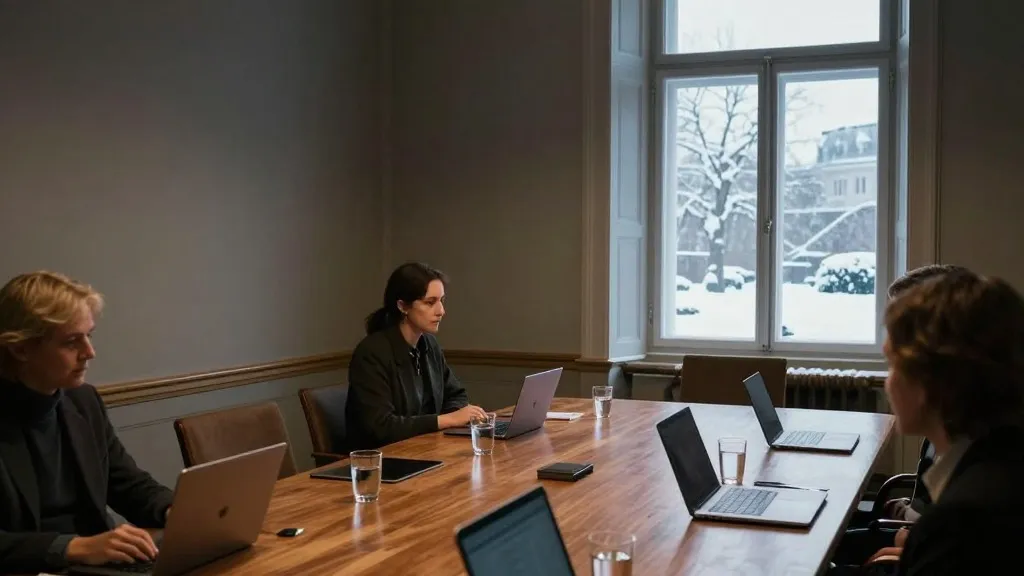
Talks are resuming, but the sky over Kyiv did not clear. Russian President Vladimir Putin has agreed in principle to restart three-way negotiations with the United States and Ukraine, potentially marking the first such session since February. This diplomatic pivot came just hours after a missile alert sounded in the Ukrainian capital and loud explosions were heard, creating a stark contrast between the language of peace and the reality of ongoing combat.
The numbers define the current landscape. The Russian Defense Ministry reported that its air defenses intercepted 373 Ukrainian drones overnight across multiple regions, including the Black Sea and the annexed Crimean Peninsula. On the ground, overnight strikes left five people dead and at least 23 wounded. In Kyiv, three residents were killed and 12 injured, with ten residential buildings damaged. Ukrainian Prime Minister Serhii Koretskyi confirmed that energy facilities in Kyiv and three other cities were targeted. These figures underscore the urgency, and the skepticism, surrounding the new diplomatic push.
Key figures in Washington, Moscow, and Kyiv are driving this process. U.S. envoy Steve Witkoff spent roughly three hours with Putin at the Constantine Palace in St. Petersburg. Yuri Ushakov, Putin’s foreign affairs adviser, stated that the talks will focus on building a security system for both nations. Jared Kushner joined via video. In Kyiv, President Volodymyr Zelenskyy expressed support for a swift restart, noting in an audio message that the agenda is to end the war and prepare for a leaders' level meeting. He added that Russia has previously canceled plans, so observers will see what happens this time.
The stakes extend beyond the battlefield to economic and geopolitical realignment. Witkoff and Kushner proposed a technical level three-way meeting and discussed a postwar economic plan. Ushakov claimed that large-scale joint economic projects between Russia and the U.S. are nearing implementation. Putin said he is ready to consider restoring U.S.-Russia economic ties and is prepared to discuss the U.S.-led conflict with Iran. In a related move, Russia released retired American teacher Stephen Hubbard, whom Witkoff called a goodwill gesture. Putin also met with Chinese Premier Li Qiang, and the leaders discussed a possible trilateral economic summit in China next month.
Despite the progress, friction remains. Ushakov described proposals from a recent Oslo meeting as containing little real value, though he later admitted they are a step in the right direction. Norwegian Prime Minister Jonas Gahr Støre suggested the new talks are likely in mid-November, noting that Russia is looking for diplomatic opportunities. He acknowledged that Ukraine may never formally accept a border along the current front line, but might learn to live with it.
President Donald Trump has applied direct pressure on Zelenskyy, telling reporters in the Oval Office that the U.S. has given a lot to Ukraine and received grief and monetary loss in return. He warned that failing to make a deal would be a very bad thing. Zelenskyy noted that Kyiv is once again receiving early warnings from partners about incoming missiles, a sign of restored coordination amid the renewed diplomatic efforts.
The next few weeks will determine whether these talks yield a durable framework or another round of stalled negotiations. With the war more than four and a half years old, the window for a breakthrough appears open, if fragile.
Source: Atlanta News First